
When it comes to giving your wooden furniture a fresh lease on life, the choice between traditional paint and aerosol spray paint introduces a dilemma. Both methods have their merits and considerations, each offering a unique approach to the art of refurbishment. In this guide, we’ll explore the pros and cons of using paint versus aerosols on wooden furniture, helping you make an informed decision based on your preferences and project requirements.
Painting with a Brush: The Timeless Craft
Pros:
Precision and Control: Using a paintbrush allows for precise application and detailed work. It’s an ideal choice for intricate designs, patterns, or furniture with ornate details.
Versatility of Finishes: Brushes enable you to achieve various finishes, from smooth and sleek to textured and brushed. This versatility allows you to tailor the look of the furniture to match your aesthetic preferences.
Ease of Colour Mixing: Mixing and blending colours is more straightforward with traditional paint. This is advantageous if you have a specific colour in mind or want to create a custom shade.
Cost-Effective: Traditional paint tends to be more cost-effective, especially if you’re working on a larger project. You can buy larger quantities of paint and apply it with a brush as needed.
Cons:
Time-Consuming Application: Painting with a brush can be time-consuming, especially for larger furniture pieces. It requires patience and careful application to avoid streaks or brush marks.
Clean-up and Maintenance: Brush painting can be messier, leading to more clean up. Additionally, brushes need proper cleaning between colour changes or after use, adding to the overall maintenance.
Potential for Brush Marks: Achieving a completely smooth finish with a brush can be challenging, and brush marks may be visible, particularly on flat surfaces.
Spray Painting with Aerosols: The Modern Convenience
Pros:
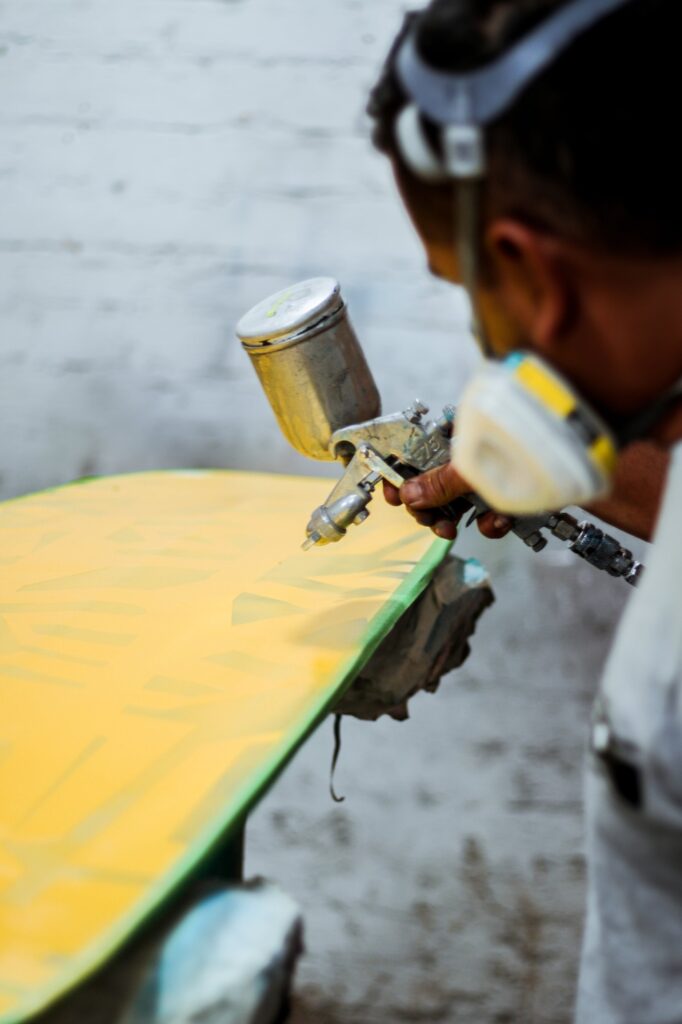
Efficient and Fast Application: Aerosol spray paint offers a quick and efficient application. It covers large surfaces evenly and dries faster than traditional paint, reducing project completion time.
Smooth Finish: Spray painting can result in a smoother finish without visible brush marks. This is particularly beneficial for achieving a sleek, modern look on furniture.
Convenience and Accessibility: Aerosol spray paint is readily available in a variety of colours and finishes. It’s convenient for small projects or when you need a specific colour without the hassle of mixing.
Less Clean up: Spray painting typically involves less clean up than brush painting. There are no brushes to clean, and over spray can be minimised with proper masking.
Cons:
Limited Detail Work: While spray paint provides excellent coverage, it may not be suitable for intricate details or small, delicate furniture pieces that require precise application.
Cost Considerations: Aerosol spray paint can be more expensive on a per-unit basis, especially for larger projects. The cost can add up if multiple cans are needed to cover an extensive area.
Environmental Impact: The propellants and solvents in aerosol spray paint may contribute to environmental concerns. Adequate ventilation and proper disposal practices are essential.
Conclusion: The Right Technique for Your Project
Choosing between paint and aerosol spray for wooden furniture hinges on your specific project requirements, personal preferences, and the desired outcome. If you value precision, control, and enjoy the traditional craft of painting, a brush may be your go-to tool. On the other hand, if efficiency, a smooth finish, and modern convenience are priorities, aerosol spray paint could be the ideal choice.
Consider the size and intricacy of your furniture, your comfort level with each method, and the overall aesthetic you wish to achieve. Whichever technique you choose, the key lies in the joy of transforming your wooden furniture into a piece that reflects your style and creativity.